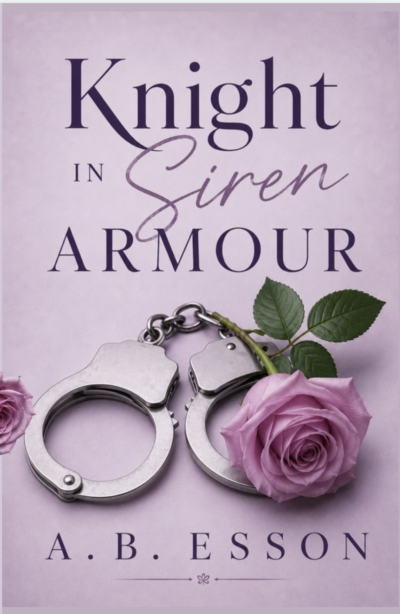
Between Vines and Verity
Free sample · Chapter One
Chapter One
Ten Minutes
The chandeliers hummed faintly above him, a soft electrical tremor beneath centuries of carved stone and vaulted shadow. Gold light pooled over polished oak floors, caught the edges of crystal glasses, skimmed over silk lapels, black ties, silk dresses and the quiet weight of money disguised as heritage.
Tomas Carrière lingered just out of sight, adjusting his cuffs with measured care.
He never rushed. The room would reveal itself to him.
At thirty, he had long since learned that rooms revealed themselves best to the man who appeared unhurried. Tall without towering, broad-shouldered in a way that suggested labour once done by hand rather than inherited posture, he wore a midnight suit cut precisely enough to look inevitable. His hair, dark, almost black, was pushed back from his forehead, not styled into obedience but guided there, as though it might choose at any moment to fall forward again. His jaw carried the faint shadow of a day not yet shaved away. Not carelessness. Calculation.
He watched the doors. He watched the clusters of guests. He watched who stood alone and who gravitated towards power and those who thought they were power.
When the host stepped forward, glass tapping gently for attention, the sound rippled through the hall.
“Ladies and gentlemen, thank you for joining us this evening. We are delighted to welcome Thomas Carrière…”
There it was.
Thomas.
Tomas did not flinch.
He never corrected them.
Not in rooms like this.
He stepped forward to polite, expectant applause. He knew that rhythm: people who had already Googled him, tasted his wine, memorised the price. Investors convinced they were discovering something rare.
He inclined his head once, brief and contained.
When he spoke, his voice carried without force. Warm, controlled, edged faintly with the south of France and something else threaded through it; years in England, sharpened consonants, vowels softened just enough to be accommodating without surrender.
“Thank you for inviting me back,” he began. “I am told it has become a tradition.”
A ripple of laughter. He let it settle.
“For those of you who have not yet visited Minervois, I would recommend it. Not because it is fashionable…”
He paused before continuing. “but because it refuses to be.”
More laughter, this time deeper. He noted who laughed easily and who waited, unsure whether the line required approval.
He continued.
He spoke of land first. Always land first. Of limestone and schist, of vines that had learned to survive mistral winds and summers that pressed heat into the earth until it cracked. He spoke not as a salesman but as a custodian. His hands moved sparingly, carving the air, when necessary, then returning to rest lightly at the podium’s edge.
“Our family has worked those slopes for three generations,” he said. “My grandfather believed that a vineyard is not owned. It is borrowed. You are given a season. Perhaps two. You do not impose yourself upon it. You listen.”
He saw heads tilt, saw pens lift, saw phones angled discreetly.
He shifted, just slightly.
“Of course,” he added lightly, “one must also make a living.”
The hall answered him with appreciative amusement.
He spoke of export markets, of the quiet expansion into British retailers, of Waitrose buyers who had once raised an eyebrow at a £38 bottle and now ordered by the pallet. He did not boast. He simply stated what was fact.
“Exclusivity,” he said, “is often confused with arrogance. The two are not the same. If you produce less, but you produce it well, you protect the integrity of the work.”
He let the word integrity hang.
He liked testing rooms. A sentence dropped without adornment revealed more about listeners than about him.
As he scanned the audience, cataloguing response, his gaze drifted to the back.
He had not meant it to linger.
But it did.
There, half-shadowed by the dimmer lights near the rear doors, stood a woman with a glass of red wine balanced loosely between her fingers
Not perched. Not posed. She was not angled towards him in admiration, nor angled away in indifference. She stood as though she were simply observing.
He forgot the next sentence, only for a fraction.
Alien. Unwelcome.
He recovered before anyone else could notice.
“and in the end,” he continued smoothly, “wine is only as good as the company with whom you choose to drink it.” A murmur of agreement.
He swept his gaze forward again, but something had shifted. Each time he let his eyes circle the hall, they returned, inevitably, to the back.
She did not laugh at the places the room laughed.
She did not look unimpressed either.
She looked… attentive.
The rest of his speech sharpened. He enjoyed this. Being watched by someone who was not easily persuaded. He ended without crescendo.
“Thank you.”
The applause was stronger now. Warmer.
He stepped down from the dais and immediately the choreography began. Hands extended. Cards offered. Questions layered with flattery.
“Thomas, that was a great speech.”
He shook hands. Smiled. Listened. Answered. Accepted a glass of wine from a passing server.
He lifted it, took two measured sips. Always two, enough to honour the ritual.
He moved with efficiency, angling gradually towards the exit. It was his pattern. Deliver, engage briefly, leave before the evening became indulgent. Ten minutes. Maximum.
He could feel it already, eight minutes in.
He answered a final question about distribution logistics, nodded once more to the host.
And then.
He did not leave, he turned instead, towards the back. As he crossed the hall, the light shifted. Faces became clearer. Fabrics brighter.
She was speaking to a man in his forties, nodding at something he was saying. Closer now, Tomas could see her skin properly, olive-toned, warm beneath the chandeliers’ gold. Her hair was pulled into a low ponytail, though several loose curls had escaped and now curved rebelliously around her temples and neck, moving softly when she tilted her head.
She wore no obvious statement jewellery. No glittering distractions.
Just quiet confidence.
As he approached, her eyes lifted.
Light brown, almost grey.
For a second, one unguarded second, he held her gaze too long.
The man she was speaking to turned, startled by Tomas’ presence.
“Thomas! That was a great speech.”
Tomas answered him, polite, measured.
“Thank you. I am glad you enjoyed it.”
But his eyes returned to her.
The man followed the direction of that look. Something flickered in his expression; understanding perhaps and he cleared his throat.
“Well, wonderful evening. I must just…” He gestured vaguely and slipped away with discreet speed.
Tomas shifted his glass to his left hand and extended his right.
“Thomas Carrière.”
Her fingers slid into his hand. Firm. Not tentative.
“Selene Hannah.”
Her voice was lower than he expected. Calm. Unhurried.
“I made the assumption it was Tomas,” she added, the French pronunciation precise. “Toh-Mah.”
A smile touched the corner of his mouth.
“You would be correct.”
He studied her more closely now. Up close, her eyes were not merely light brown. They held flecks of silver at the edge of the iris, catching light when she moved. Intelligent eyes. Observant.
“Most people do not listen carefully enough to notice,” he said.
“I listen,” she replied simply.
He tilted his head slightly.
“You are not impressed.”
“I don’t tend to be.”
A half smile, slower this time.
“Good. I prefer to work for it.”
Silence settled between them, but not awkwardly. It was the kind of silence that measured.
She gestured lightly with her glass. “When you spoke about soil composition affecting tannin development in the third-generation vines…”
He blinked.
No one ever asked about that part.
“you mentioned that you reduced intervention after 2016. Was that a financial decision or philosophical?”
There it was again. That unfamiliar off-balance sensation.
He shifted his weight, intrigued.
“Philosophical,” he answered. “Though philosophy must eventually survive financially.”
She nodded. “Because the 2016 harvest had higher volatility in sugar levels.”
He stared at her properly now.
“Yes.”
The word left him softer than he intended.
“That was the year you stopped overcorrecting,” she said.
He felt it then, that rare, electric clarity when someone had not merely listened but understood.
“Most people,” he said slowly, “prefer the simpler parts of the story.”
“People usually do.”
“And you?”
“I’m a neuropsychologist,” she replied. “I make a living from the details people overlook.”
He absorbed that.
A neuropsychologist.
“And yet,” he said, “you are at a wine event.”
“I was invited as a representative of the university.”
He glanced around the hall, then back at her.
“That seems… unrelated.”
“Neuroscience and sensory perception intersect more than people assume.”
He almost laughed.
“Of course they do.”
She studied him for a moment.
“You’re fifteen minutes over your usual ten-minute exit.” His brows lifted slightly.
“I did not know you were familiar with my habits.”
“Someone told me.”
“Ah.”
“And?” she prompted.
“There has never been anything to keep me longer than ten minutes.”
Her gaze did not waver.
“What changed tonight?”
He held her eyes.
“There was someone at the back of the room I needed to speak to.”
She tilted her head slightly.
“Referring to me?”
“Yes.”
The honesty sat between them, unapologetic.
She did not blush. She did not look away.
“Bold.”
“Efficient.”
A corner of her mouth curved.
He took the final sip from his glass and set it down on a passing tray.
“May I have your number, Selene?”
She considered him, not coy, not dismissive. Evaluating. Then she recited it.
He typed it in, showed her the screen.
She nodded once.
They stood a moment longer, suspended.
“I should leave,” she said at last.
“I will walk you to the door.”
They moved together through the thinning crowd. The doors opened onto the cool Oxford night, stone breathing out the day’s stored warmth.
Outside, the air was quieter. Softer.
She turned to him.
“Goodnight, Tomas.”
He let his name sit correctly between them.
“Goodnight, Selene.”
She walked away without looking back.
He did not follow, but he did not move immediately.
Oxford at night had a particular kind of silence, the kind that wasn’t empty, but layered. Footsteps softened by ancient stone. A distant door closing somewhere inside the hall. Laughter leaking out in brief, muffled bursts, then swallowed again. The air carried cold and damp and something faintly metallic, like rain that hadn’t decided whether it would fall.
He stood under the edge of the portico where the light didn’t quite reach, and watched the path she’d taken until it became simply a stretch of darkness and lamplight and other people’s lives.
The words Goodnight, Tomas, sat in his chest like the first burn of alcohol on an empty stomach. Controlled, but undeniable.
He rarely replayed conversations. He rarely replayed anything.
Yet his mind had already returned to her voice, to the French of his name spoken correctly, to the way she had held his gaze without leaning into the performance of him. It had been a long time since someone’s attention felt like a mirror rather than a spotlight.
A group spilled out of the hall behind him, still buoyant on wine and proximity to prestige. Tomas stepped aside automatically, letting them pass without effort, without acknowledgement. He wasn’t avoiding them; he simply didn’t belong to them anymore, not in the way they wanted.
One of them called, “Thomas!” with the bright familiarity of a man who owned entitlement.
Tomas did not turn.
He waited until their footsteps faded again, then he walked down the stone steps and towards the curb where his car was parked.
His phone was heavy in his hand.
He looked at the screen, her number, saved already.
Selene Hannah.
The name felt formal, almost too neat for the woman with disobedient curls and eyes that caught the light in silver.
He stared at the contact details for a moment longer than necessary, as though by watching it he might discover something hidden in the letters.
He did not text her, not yet.
There were rules, even for him, and he liked his rules. They kept the world orderly. They kept him from becoming… impulsive.
But as he slid into the driver’s seat, closing the door on the night, he realised he had already broken the most important one.
He had stayed.
He drove north.
Oxford thinned into wider roads and taller trees, lamplight dappling over stone façades and wrought-iron gates. He turned onto Banbury Road without signalling too early, habit, and eased the car along the crescent of pale Georgian townhouses, their symmetry precise, their windows dark behind drawn curtains.
His house sat halfway down the row.
Cream stone. Black iron railings. The kind of property that did not announce wealth loudly, it assumed it.
He parked on his private driveway and stepped out into the night.
The night here was quieter than in the centre. No laughter spilling from halls. No taxis idling. Just wind brushing through branches and the distant hum of a city that respected its own history.
He unlocked the front door and stepped inside.
The house was warm, not ornate, not decorated to impress guests. It carried restraint, oak floors, high ceilings, art chosen carefully rather than expensively. French landscapes hung in the stairwell. A single black-and-white photograph of the vineyard in winter above the fireplace.
He set his keys down in the shallow ceramic bowl near the door, always the same place, and loosened his tie as he moved through the hallway.
Silence greeted him.
He preferred it.
He poured himself a small glass of water in the kitchen, leaning one hip against the marble counter. The house smelled faintly of wood and citrus polish. Order. Control.
His phone lit up.
Mum.
He smiled before opening it.
Mum: Are you finished?
Mum: Your father says you promised to call tomorrow. Apparently he has ideas.
His English belonged to her.
Not the polished version investors heard. Not the moderated tone of speeches. The real one, easy, unforced, shaped by bedtime stories and Sunday lunches and a mother who refused to let her son sound anything but precise.
He typed back.
Tomas: Yes. Just got home.
Tomas: I’ll call in the morning before I fly back.
Three dots appeared almost immediately.
Mum: Did it go well?
He glanced around the quiet kitchen.
He answered honestly.
Tomas: It was interesting.
Mum: That usually means something unexpected happened.
He almost laughed.
She had always been able to read what he didn’t say.
Tomas: Maybe.
Mum: Don’t leave too quickly every time, Tomas. Sometimes the best things happen after the speech.
He looked at that message for longer than he intended. Tonight, he had not left.
For the first time in years.
He typed:
Tomas: À demain, maman. Je t’aime.
He set the phone down on the counter and stood there, staring at nothing in particular.
Then, without thinking, he picked it up again.
Selene’s number.
He opened the message app.
His thumb hovered, that small, grounding movement brushing once along the edge of the phone. A habit he wasn’t aware of yet. A habit that surfaced only when something unsettled him.
He typed.
Tomas: Selene. It is Tomas. You were right. I hope you arrived home safely.
He placed the phone face-up on the counter and waited, not pacing, not restless, simply still.
The reply came quickly.
Selene: Home. Safe. Still unimpressed. But curious.
A slow smile curved his mouth.
Curious.
He leaned back against the counter.
Tomas: Curiosity is a dangerous habit.
The response arrived almost immediately.
Selene: So is staying fifteen minutes longer than you meant to. His gaze darkened slightly.
She noticed patterns.
He preferred that.
He answered:
Tomas: There has never been anything to keep me longer than ten minutes.
The typing indicator appeared. Disappeared. Reappeared.
Then:
Selene: Until there’s a person at the back that you need to speak to.
The kitchen felt different.
The same marble counters. The same quiet house. The same controlled life.
But something had shifted.
He did not reply immediately.
Instead, he looked out of the tall sash window towards the dark outline of the trees lining the street.
For the first time since buying this house, since establishing his English foothold separate from France, the space felt less like a strategic asset and more like a place where something might begin.
He typed one final message before setting the phone down.
Tomas: Goodnight, Selene.
The reply came seconds later.
Selene: Goodnight, Tomas.
He did not move for a long time after that.
Not because he didn’t know what to do next.
But because, for once, he did not feel the need to control it.
And that, more than anything, was new.